

New Year’s resolutions are so last year!
This time of year, you see a lot of articles telling you how to keep your New Year’s resolutions. If you ask me, that’s like an article about how to keep your CDs from getting scratched. It’s old news!
According to Psychology Today, almost 80% of people who make resolutions will give up on them before the end of January. With those success rates, it’s easy to wonder why anyone would make resolutions.
The answer can be found in the resolutions people are making. Just look at the top five resolutions made in 2025, according to a survey conducted by Statista.com:
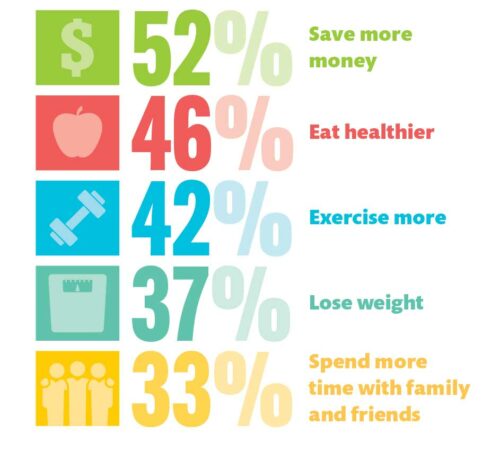
We make resolutions because we want to improve our lives. We long for a new reality in which we are a better, healthier version of ourselves. Our motives aren’t bad. It’s our methodology that’s off.
Why Resolutions Fail
So, why aren’t we able to keep our resolutions? There are several reasons why our resolutions fail.
The first is the most obvious. If you made your resolution at 11:45 p.m. on New Year’s Eve, you haven’t put a lot of thought into the goal. But it sure sounded good when someone at the New Year’s party asked if you were making any resolutions.
Another reason our resolutions fail is we set ambiguous goals. Losing weight or saving more money are commendable outcomes, but they aren’t specific.
The more you can define what success looks like, the easier it will be to achieve the outcome you want: I want to lose 20 pounds before my high school reunion. I want to save $5,000 for a trip to the Caribbean next year.
Finally, we fail to keep our resolutions because we don’t have a clear understanding of what it takes to accomplish them.
Anyone who has tried to lose weight knows it’s hard. It involves eating healthier, increasing your exercise, and getting plenty of rest. Any one of those things could represent a major lifestyle change.
Without a plan for how to accomplish each of those changes, achieving the resolution of losing weight is almost impossible. Eating healthier means new menus, different shopping habits, and strategies for controlling our cravings. Increased exercise requires access to exercise equipment, making time in our schedule to work out, and a willingness to have sore muscles.
When we don’t stop to consider what is necessary to achieve our resolutions, it’s easy to be overwhelmed by the sheer amount of change required for success.
Set Goals, Not Resolutions
But don’t despair! You can make positive life changes in 2026 without making resolutions.
For me, the simple act of calling the process something else makes a big difference. I don’t set New Year’s resolutions, but I do have annual goals I’m trying to achieve.
What’s the difference between resolutions and goals?
Resolutions are often focused on one specific change, while goals are more wholistic, often addressing multiple things that are important to us.
Resolutions prioritize short-term change, while goals can be part of a larger strategy.
In short, resolutions are transactional. Goals are transformational.
Annual goals can, and should, be part of a multiyear vision for what you want your life to look like in three to five years. This vision should be aligned with the values that reflect who you are and what brings meaning to your life.
Let’s say your values include spending more time with family and getting out of the rat race of corporate life. Your five-year vision may be to transition to a remote or hybrid role that allows you to relocate to a smaller community closer to your elderly parents.
Now, you can set annual goals that help you accomplish this five-year vision. Years one and two may include eliminating debt so you can live on a smaller salary. Year three may include learning new skills better suited for remote work. Your goals for year four may center on finding an employer open to remote work, and year five may be finalizing plans to move and getting settled in your new hometown.
I know what you’re thinking. All of this sounds a lot harder than one simple resolution. However, aligning your goals with your values creates a greater sense of ownership than a resolution. When you can connect your goal with your vision for your future life, it is easier to stay focused on achieving your goals.
Creating a Goal Road Map
So now that you understand the importance of taking a wholistic approach to setting and achieving goals, how do you turn your goal into reality?
Did you ever take a road trip as a kid? I would pull out the Rand McNally Atlas to check the route we were going to take. I’d study the roads we would travel and look at all the cities we’d drive through. While I love the GPS on my phone, I sort of miss those days with the atlas.
Maybe that’s why I love the analogy of a road map to illustrate our goal journey.
Living right outside Washington, D.C., I am a proverbial stone’s throw away from I-95. But before I get on the highway, I need to know if I’m headed to Maine or Florida. It’s not enough just to be on I-95. I need clarity about my destination so I don’t go in the wrong direction.
The same is true with our goals. With every goal I set, I like to ask myself the question, “What does success look like?” The answer helps me define the outcome I’m aiming for. The more detailed my answers are to that question, the easier it is to take the next steps on my goal journey.
I find that a lot of people struggle with big goals. They get overwhelmed with the size of their goal or they don’t know where to start. Breaking down goals into milestones can make it easier to create a comprehensive action plan.
If your goal is to write your first novel, staring at a blank computer screen may be a bit overwhelming. Where do you even start?
Breaking down the writing process into milestones makes it more manageable. You need a plot outline, character development, and research before you ever start writing.
Each of these milestones is like a mini-goal, and you can create an action plan and list of tasks for each one of them. When you put them all together, it makes the huge job of writing a book a lot easier to manage.
Think back to that childhood road trip. I would always watch for signs that gave the mileage to the next big city. This helped me gauge our progress—how far we’d already come, and how far we had left to go.
Milestones keep you focused on taking the next right step to achieve your goal and minimize distractions. Reaching these milestones is a great excuse to celebrate, which helps you stay motivated on your goal journey.
The final step is to assign a deadline for every task, milestone, and goal on your goal journey. Deadlines create urgency and accountability so you can stay on track. Review these deadlines regularly to ensure you don’t miss anything.
Your Goals Are Achievable
If you’ve given up on New Year’s resolutions, I encourage you to try setting strategic goals instead. When your goals are aligned with your life vision and values, they are achievable if you follow the framework and stay committed to the work.
I can’t wait to see what goals you accomplish this year!
Chris LeBrun