If you can’t afford the organic option every time, keep in mind “The Dirty Dozen and “The Clean 15.”


Find online articles, recipes and herb to better your health.
 |
If you can’t afford the organic option every time, keep in mind “The Dirty Dozen and “The Clean 15.”
If you need a stellar reference to preserving food that makes it easy to sleuth out your options, whether canning, freezing, dehydrating or digging a root cellar, grab The Beginner’s Guide to Preserving Food at Home: Easy Techniques for the Freshest Flavors in Jams, Jellies, Pickles, Relishes, Salsas, Sauces, and Frozen and Dried Fruits and […]
Considering a vegetarian diet but don’t know where to start? Dietitian April Hamilton gives you the valuable transition tips she shares with her friends and clients.
Here are just a few things I’ve learned as a vegetarian: 1. Tofu has gotten an unfair bad rap. So have leafy greens. Actually, a lot of healthy foods are much better than the cynics would lead you to believe. Never tried kumquats or quinoa? Well, what are you waiting for?
It’s one of the most commonly asked questions of vegetarians: “But how do you get your protein?” Winston J. Craig answers—
and debunks some myths about protein while he’s at it.
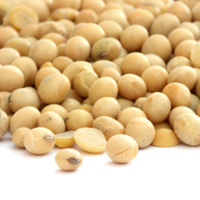
Although soybeans have been a staple crop in China for thousands of years, they have come to Western kitchens only in recent years. In 1904 George Washington Carver noted that the soybean is a rich source of protein and oil. By the early 1930s these beans were grown commercially in the United States. Since then they have been widely used to feed livestock and are currently one of the biggest cash crops in America.
Today soy is known as an inexpensive source of protein. Both the Food Guide Pyramid and Nutrition and Your Health: Dietary Guidelines for Americans, fifth ed., list soy foods as a way to meet dietary guidelines. A one-cup (8 oz.) serving of tofu, for example, is listed as a serving suggestion in the meat and beans Group.
Read more about Soy Connection …
Before you wrinkle up your nose and let loose a big “Ick!” consider this fact: Just because you don’t find such items on the menu of your favorite restaurant doesn’t mean they’re not in the food.
Down to the Sea
Take ice cream, pudding, cottage cheese, salad dressing, or chocolate milk. Check the label, and you’ll find the word “carrageen” nestled in with the other ingredients. Fine folk who live and work along the coasts of New England and Canada pull tons of the stuff out of the ocean each year. It’s red, leafy, and totally seaweed.
After being raked into boats, carrageen is taken to processing plants where it’s turned into a tasteless, off-white powder that quickly dissolves in water and becomes jellylike whenever it comes in contact with the proteins found in milk.
Called the Salad Lady by some in my churches, I love to bring fresh raw foods to our luncheons and potlucks. I learned to love these gourmet salad greens, sometimes called mesclun mix. My sister had married an Italian from Sicily. He loved a big green salad with exotic lettuce, and thus we all learned to love them.
Since I love to garden, I was soon growing my own fresh greens: romaine, arugula, and red lettuce. Later I added radicchio, escarole, and endive to my repertoire. At first I painstakingly gathered the young leaves one by one. That being too time-consuming, I soon learned that I could easily use a sharp knife, trim a whole section off, and they would soon grow new leaves.
Now in my small backyard I have my lettuce garden, along with my other vegetables, interspersed with my flowers. They are so easy to grow, and I love to give them away to friends who appreciate their subtle and not-so-subtle flavors.
Statistics tell us that the average American eats only one half of a serving of whole grains daily, although the current recommendation is to eat at least three servings per day. Some people consume predominant whole grains, so this means that many people are only rarely or not ever eating whole grains.
Unfortunately, when many people think of whole grains they think only of whole wheat. That one is great, but there are many more choices available. Several may even have more nutrients than whole wheat. Examples of other grains include oats, barley, millet, rye, brown rice, corn (maize), buckwheat, and amaranth.
So what exactly is a “whole” grain, anyway? Whole grains can be defined as having all three parts of the kernel included. Refined grains, such as white flour, are made up of the endosperm, which is mainly starch. The kernel also contains a germ and the bran. These two layers are loaded with nutrients, including vitamin E, several B vitamins, and some important minerals, including zinc, magnesium, manganese, chro-mium, selenium, and molybdenum. During the refining process these nutrient-rich layers are lost. Fiber is also lost.
At the beginning of the twentieth century heart disease in the public was a small problem; by the end of the century it had become the most frequent cause of death. Studies have shown a strong association between dietary saturated fat intake and the occurrence of this disease. The American diet provides an overabundance of saturated fat and cholesterol found primarily in animal products.